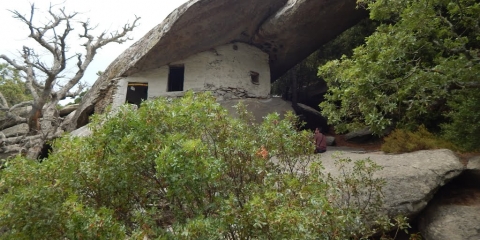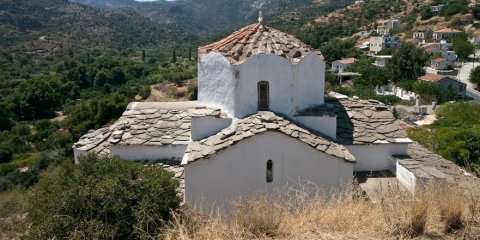
Στην ανατολικότερη πλευρά της ακριτικής Σάμου και σε υψόμετρο 400 μέτρων επί του όρους Ραμπαηδόνι, μέσα σε πευκόφυτη και υποβλητική τοποθεσία, κείται η ιστορική Ιερά Μονή της Ζωοδόχου Πηγής, της επικαλουμένης και «Αηλιώτισσας» λόγω της γειτνίασής της με το παρακείμενο εξωκλήσι του Προφήτη Ηλία.
Η θέα που δύναται να αντικρύσει ο προσκυνητής είναι εκπληκτική, καθώς εκτός από το ακρωτήριο Πράσσο και το σύμπλεγμα των μικρών νησίδων, μπορεί να ατενίσει με νοσταλγία τη Μυκάλη, την Έφεσο και τα παράλια της Μικράς Ασίας.
Η μονή ιδρύθηκε το 1756 από τον ιερομόναχο Δωρόθεο, ο οποίος αιτήθηκε από τον Αρχιεπίσκοπο Σάμου Καλλίνικο την παραχώρηση του μικρού εξωκκλησίου της Ζωοδόχου Πηγής για να ασκητέψει.
Ο Δωρόθεος προσείλκυσε μικρή συνοδεία μοναχών, κι έτσι το Μάιο του 1786 ολοκλήρωσε το περικαλλές καθολικό της μονής στον τύπο του εγγεγραμμένου σταυροειδούς σύνθετου τετρακίονου τρίκογχου αθωνικού ναού, με ευρύχωρο τρουλλαίο νάρθηκα.
On the eastern side of the acritic Samos at an altitude of 400 meters above the Rabaidoni Mountain, in a pine-covered and impressive location, lies the historical Monastery of Zoodochos Pigi that is also called "Ailiotissa" because of its proximity to the nearby chapel of Prophet Elias.
The view that the pilgrim can see is astonishing, as besides Cape Prasos and the complex of small islands, he/she can gaze at Mykali, Ephesus and the coasts of Asia Minor with nostalgia.
The Monastery was founded in 1756 by the monk Dorotheos, who requested by Archbishop Kallinikos of Samos to concede the small chapel of Zoodohos Pigi to practice.
Dorotheos attracted a small convoy of monks, so in May 1786, he completed the Catholic of the Monastery following the Athonite type of cruciform, complex, three-cone, and four columned Churches, with spacious domed narthex.
According to the tradition, the four columns for the erection of the temple were transferred from the archaeological site of Asia Minor to Miletus and after the hearty prays of the monks, the difficulties of transporting them from the beach to the monastery were overcome in a miraculous way.
From the frescoes of the Catholic, there are few such as Jesus Christ and the Virgin Mary in Nartheka and the Sacred Step.
The wood-carved and gold-plated iconostasis that dominates in the interior of the Catholicon is the work of Georgios Tantolos and dates back to 1788.
The wood-carved archaic throne is of a special art and on both sides carries painted representations with the local Zosimas to communion with the St. Mary of Egypt as well as with the confessor his spiritualist, from whose mouth the sins come out in the form of snakes.
Unique artistic value is the door that leads from the narthex to the Catholicon and it’s made of 365 small wooden pieces that each one symbolizes each day of the year.
Also, it’s very important the fairly elaborate marble coating of the Catholic floor.
The rest building complex of the Monastery is the usual monastery quadrilateral type, with recently renovated and maintained two-floored transepts, as well as some arches mainly in the archontariki and the old patriarchate.
In the Monastery are interesting stone reliefs of folk ecclesiastical stone carving that are engraved by Michael Marmaras.
The dock of the outer western gate which is the main entrance of the Monastery includes pseudocolumns, plant and animal representations and a large building plaque referring to the aftadelfous monks Ignatius and Theodosios.
In the monastery many relics of Saints are kept in five relics cases. There are also several old priestly vessels, priestly buckles, arch-ribbons and the mantle of Patriarch Gregory V which brought to the island by the deacon and later archbishop Aristarchus of Samos, brother of the monastery.
This mantle was recently transported and exhibited at the Ecclesiastical Museum of the Holy Metropolis.
The monastery has a remarkable library of paleo books, some of which are manuscripts, significant stories and silver-plated Gospels of 1777, 1801, 1820 and 1840, patriarchal sigillis, which inform us of the importance, property status, and the construction of various temples on the island in the early of the 19th century, many of which were accessories of the monastery.
About sixteen chapels, small churches and metropolises belong to the monastery mainly on the eastern side of the island, as well as in Asia Minor until 1922.
Among them was the magnificent church of Saint Spyridon in Vathi, Samos, which was granted in 1864 to become a parish, while the monastery of Aghia Varvara Vlamari, which was renovated by the hieromonk Theophilos Haritsos, preceded by the Vronta Monastery and that it has become a hospitable and well-preserved ascetic seat.
Since the monastery's leadership, important personalities of solitary life have passed, where the last one was Charitonas Makris, whose bust adorns the precinct of the monastery and who was perhaps the last representative of the hesychastic tradition of Samian monasticism. The brothers of the monastery were also the Archbishops of Samos Aristarchos Varvates, Gabriel II Katsaros and Theodosios who was also its abbot.
After the death of Chariton, the priest-monk remained in the monastery, who contributed greatly to its preservation, mainly of the western transept which was completed by the care of the Metropolitan of Samos, Ikaria and Korseon, Eusebius, who took care of the conversion of the monastery to women and took care of the establishment in 2001 of small brotherhoods from the Holy Monastery of Agios Kyriakos and Ioulitis of Sidirokastro.
The Fr. Modestos moved to the neighboring historic monastery of Agia Zoni, while the presence of this dynamic female Brotherhood gave the monastery a new breath, continuing the maintenance work at a more intense pace, and regaining its old glory as a spiritual attraction for the Samians and especially the inhabitants of Vatheos and the eastern side of the island, as the small distance facilitates the frequent arrival of the pilgrims.
Today, the six-member feminine Fraternity under the rule of Gerontissa Salomis takes on an exemplary solitary life, occupied with daily treachery, but also as a basic commemorative and economic resource of Hagiography, as due to its artistic value it accepts orders from almost all Greece.
Many are the miracles that have been accomplished with the grace of the Virgin Mary at the Zoodochos Pigi Monastery, with the rescue of a merchant ship from a seaside on the Samos channel, for which the master dedicated silver benches and the most recent healing from a child's meningitis the day of the celebration of 2007, which is celebrated on Friday of Righteousness.